
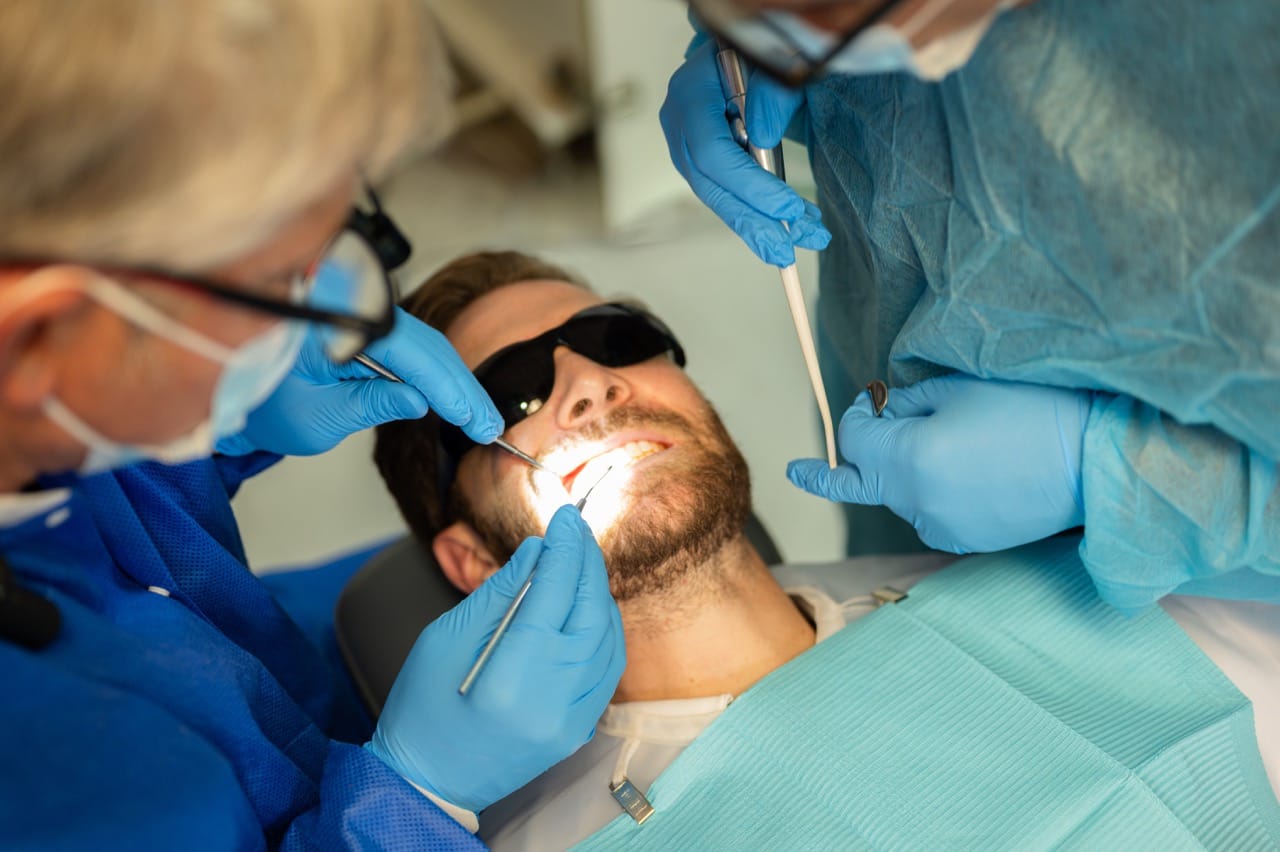
Dental cleanings are not one-size-fits-all. The right cleaning depends on your gum health, the amount of plaque and tartar you have, whether you have gum disease, and how long it has been since your last visit.
This guide breaks down the most common types of dental cleaning, what each one treats, and how dentists decide which option is right for you.
Best for: patients with healthy gums or mild gingivitis
Goal: remove plaque and tartar above the gumline, polish teeth, and reduce gum inflammation
A prophylaxis cleaning is what most people mean by a “regular cleaning.” The hygienist removes plaque and tartar from the tooth surfaces, including along the gumline, then polishes the teeth to remove surface stains. (Dentistry, n.d.)
What to expect
How often
Best for: gum disease (periodontitis) or deeper tartar below the gumline
Goal: clean infection and tartar from under the gums and smooth root surfaces so gums can reattach
Deep cleaning typically involves scaling (removing plaque and tartar below the gumline) and root planing (smoothing the root surface to reduce bacterial buildup and promote healing). Dentists usually recommend this when you have signs of periodontal disease, such as deeper gum pockets, bone loss, bleeding, or persistent inflammation. (Periodontitis, n.d.)
What to expect
Why it matters
Untreated gum disease can lead to gum recession, bone loss, and eventually tooth loss. Deep cleaning is a key step to stopping progression.
Best for: patients who have had deep cleaning or periodontal treatment
Goal: prevent reinfection and keep gum pockets stable
Periodontal maintenance is not the same as a routine cleaning. It is a targeted cleaning plan designed for people with a history of periodontitis. It focuses on areas that are more likely to collect bacteria again. (Periodontal Maintenance vs. Routine Cleanings, 2025)
What to expect
Why is it recommended?
After gum disease, bacteria can return quickly. More frequent maintenance lowers the risk of flare-ups and helps protect bone support.
Best for: people with significant tartar or plaque buildup, often after long gaps in care
Goal: remove heavy deposits so the dentist can properly assess gums and teeth
If tartar covers large parts of your teeth, it can be hard to evaluate gum health and find decay accurately. In these cases, your dental team may start with gross debridement to remove the buildup. (D4355: GROSS DEBRIDEMENT – 2023 UPDATE, 2023)
What to expect
Best for: surface stains, plaque biofilm, and some patients who want a gentler feel
Goal: remove stain and soft deposits using air, water, and fine powder
Air polishing can be used as part of a routine cleaning or maintenance visit. It is often effective for removing surface stains from coffee, tea, wine, and tobacco.
Important note
Air polishing is not a replacement for scaling when tartar is present. Your provider decides if it is appropriate based on your enamel, restorations, sensitivity, and gum health.
Best for: smoothing tooth surfaces after plaque and tartar removal
Goal: reduce surface stains and make teeth feel cleaner
Polishing usually happens after scaling. It does not remove tartar or dramatically whiten teeth, but it can improve smoothness and reduce surface stains.
Best for: cavity-prone patients, sensitive teeth, kids and teens, exposed roots
Goal: strengthen enamel and reduce tooth decay risk
Fluoride is often offered after cleanings, especially if you have frequent cavities, dry mouth, or sensitivity. It can be applied as a varnish, gel, or foam. (Pediatrics, 2020)
Your provider looks at:
If your gums are healthy, a routine cleaning is usually enough. If gum pockets are deeper or infection is present, deep cleaning or periodontal maintenance is more likely.
Most visits include:
The main types are routine cleaning (prophylaxis), deep cleaning (scaling and root planing), periodontal maintenance, and gross debridement. Some offices also use air polishing for stain and biofilm removal.
Regular cleaning focuses on plaque and tartar above the gumline to promote healthier gums. A deep cleaning treats tartar and bacteria below the gumline and smooths roots to help control gum disease.
Signs include deeper-than-normal gum pockets, bleeding when brushing, persistent bad breath, gum recession, loose teeth, and X-ray evidence of bone loss. Your dentist confirms this with an exam and measurements.
It can be uncomfortable, but many clinics use a local anesthetic to help you feel more comfortable. You may feel soreness or sensitivity for a day or two afterward.
Routine cleanings often take 30 to 60 minutes. Deep cleanings may be longer and are often split into multiple visits. Periodontal maintenance appointments usually fall in between. (Periodontal Maintenance Recall, n.d.)
For many patients, yes. Your dentist or hygienist decides if it is appropriate based on sensitivity, enamel condition, restorations, and gum health.
Many people do well every 6 months, but if you have a history of gum disease, you may need cleanings every 3 to 4 months.
Cleanings remove surface stains and make teeth look brighter, but they do not change the natural tooth color the way whitening treatments do.