
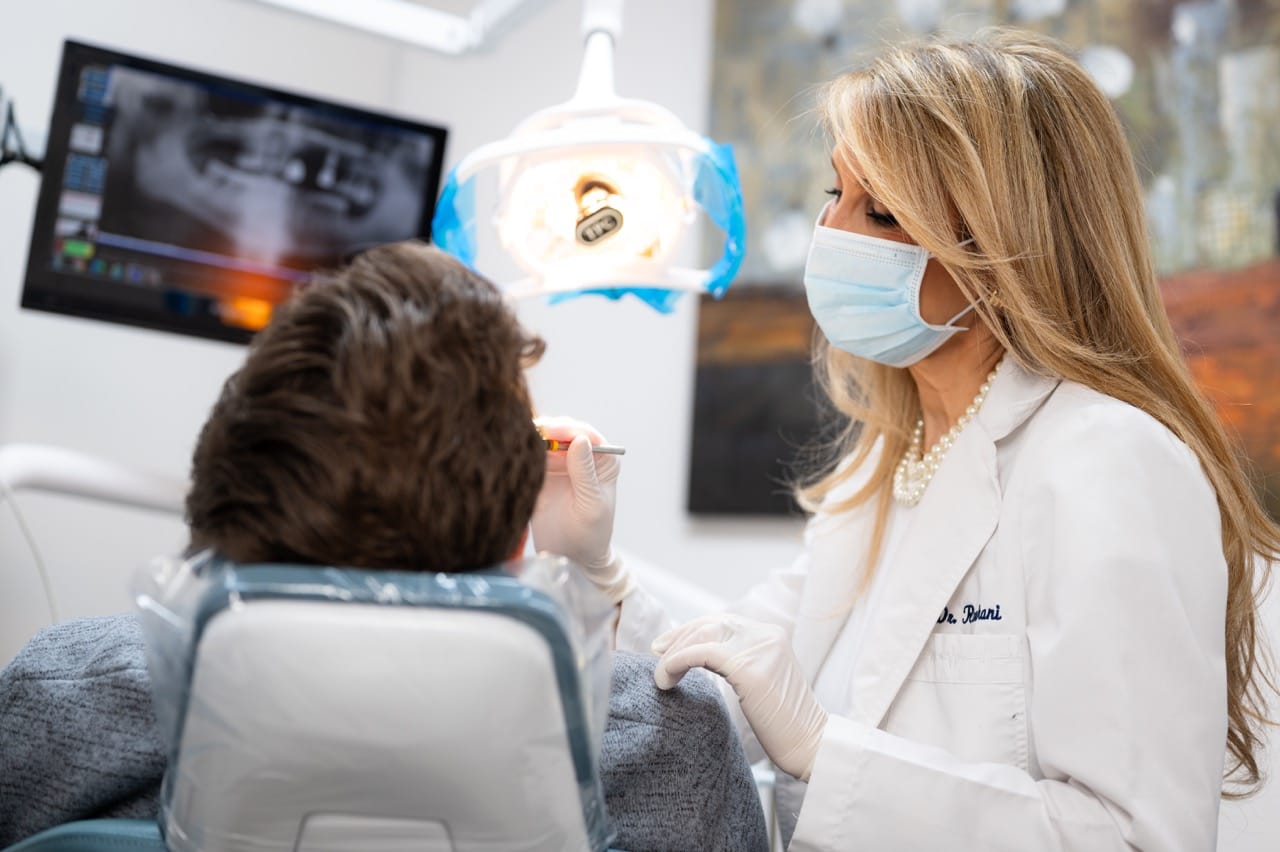
There is a particular moment many patients describe in the consultation chair: they hold up a mirror to a trial smile design, see what their teeth could look like, and go quiet for a beat. It is not vanity. It is the recognition that something they have quietly lived with for years, discolored teeth, a chipped edge, a gap they have learned to hide in photos, does not have to stay that way.
Porcelain veneers are one of cosmetic dentistry’s most powerful and most misunderstood tools. They can genuinely transform a smile, but they also involve a permanent commitment to your tooth structure, a meaningful financial investment, and decisions that require careful, informed thought before you proceed.
This guide covers everything you need to understand before sitting down for a veneer consultation: what veneers are, how they work, which types exist and how they differ, what the process looks like from first appointment to final placement, realistic costs, candidacy considerations, and the honest tradeoffs involved.
A porcelain veneer is a thin, custom-made shell of dental ceramic bonded to the front-facing surface of a tooth to alter its appearance. The veneer covers visible imperfections and is shaped and shaded to integrate seamlessly with the surrounding teeth, creating an improved smile that looks natural rather than artificial.
The concept is straightforward. Enamel, the outermost layer of the tooth, is reduced by a controlled, precise amount, typically between 0.3 and 0.7 millimeters for traditional veneers, to create space for the ceramic restoration. An impression or digital scan is taken, and a dental laboratory crafts a veneer matched to the shape, size, and shade specified in the treatment plan. Once ready, it is permanently cemented to the tooth.
The result, when done well, is a tooth that reflects light the way natural enamel does, resists staining more effectively than natural enamel, and has the precise shape and color that the patient and dentist designed together.
Veneers are primarily a cosmetic procedure. They address the appearance of teeth, not their structural function in the way a crown does. However, they are also functional restorations in the sense that the porcelain used is durable, well-tolerated by gum tissue, and designed to withstand normal biting forces when properly placed.
Veneers are not a solution for every dental concern, but they are an excellent choice for several common cosmetic complaints when the underlying teeth are structurally sound.
Stains caused by tetracycline antibiotic use during tooth development, fluorosis, root canal treatment, or natural aging can be deeply embedded in the tooth structure and resistant to bleaching. Veneers mask these completely and permanently.
A chipped incisor or a slightly broken edge can make a smile look damaged even when the tooth is otherwise healthy. A veneer restores the natural contour of the tooth invisibly.
Veneers can be designed slightly wider than the existing teeth to close spaces, particularly between the upper front teeth, without orthodontic treatment. The appropriateness of this approach depends on the size of the gap and the overall bite.
While veneers do not move teeth the way orthodontics does, slight variations in tooth position, rotation, or irregularity can often be disguised through careful veneer design. More significant misalignment may require orthodontics first.
Years of normal wear, acid erosion, or mild bruxism can leave teeth looking shorter and more aged. Veneers restore length and youthful proportion to the smile.
Teeth that are naturally pointed, stubby, unusually small (peg laterals), or otherwise disproportionate can be reshaped to better size and form.
A single darkened tooth among otherwise lighter teeth, or a smile with inconsistent shade variation, can be unified and harmonized.
Not all veneers are the same material, thickness, or preparation philosophy. Understanding the differences is important because the right choice depends on your specific clinical situation, aesthetic goals, and expectations for longevity.
Traditional Porcelain Veneers (Feldspathic)
Feldspathic porcelain veneers are handcrafted layer by layer by a skilled dental ceramist directly on a model of your prepared teeth. This technique produces the most lifelike, optically complex result because the layering mimics the natural translucency and depth of enamel.
The tradeoff is that feldspathic porcelain is more technique-sensitive and can be more brittle than pressed ceramics. These veneers require meticulous laboratory work and are typically the premium option. They are best suited for anterior (front) teeth where aesthetics are paramount and biting forces are not extreme.
Pressed Ceramic Veneers (e-max and Similar)
Pressed ceramic veneers, most commonly made from lithium disilicate under brand names like IPS e.max, are fabricated by pressing ceramic material under heat and pressure into a mold. This process produces a highly dense, strong ceramic that is more resistant to fracture than feldspathic porcelain while still offering excellent aesthetics.
Pressed ceramics are the most widely used material for veneers in modern cosmetic dentistry. They offer a reliable combination of strength, translucency, and color stability. Many patients and dentists consider them the sweet spot between aesthetics and durability.
No-Prep and Minimal-Prep Veneers
No-prep veneers, of which Lumineers is the best-known brand, are designed to be thin enough (sometimes 0.2 to 0.3 millimeters) to bond to teeth with little to no enamel reduction. The appeal is obvious: the procedure is reversible in theory because the underlying tooth structure is preserved.
However, no-prep veneers are not appropriate for every case, and their limitations are worth understanding honestly. Because no enamel is removed to create space, the veneer adds thickness to the existing tooth profile. This can result in a slightly bulkier appearance and feel, and if the existing teeth are already prominent or protrusive, the result may look unnatural. No-prep veneers work best in specific clinical situations, particularly when teeth are in good position and the patient has lighter existing tooth color.
Not every cosmetic dentist recommends them as a first choice, and the decision should be made based on your specific tooth anatomy and aesthetic goals, not simply on the desire to avoid any preparation.
Composite Resin Veneers
Composite veneers are made from tooth-colored resin material, the same material used in tooth-colored fillings. They can be applied directly to the tooth in the chair (direct composite veneers) or fabricated in a laboratory and bonded similarly to porcelain (indirect composite veneers).
Composite veneers are significantly less expensive than porcelain and can often be placed in a single appointment. However, they are less durable, more prone to staining over time, and do not have the same optical qualities as ceramic. They typically last five to seven years before showing wear or discoloration compared to 10 to 20-plus years for quality porcelain.
Composite veneers can be an appropriate option for younger patients, patients on a budget, or as a temporary aesthetic solution while planning a more comprehensive treatment.
| Feature | Traditional Porcelain | Pressed Ceramic (e.max) | No-Prep / Lumineers | Composite Resin |
| Enamel removal | Moderate (0.5–0.7mm) | Moderate (0.3–0.5mm) | Minimal to none | Minimal |
| Reversibility | No | No | Potentially | Partially |
| Aesthetics | Exceptional | Excellent | Good (case-dependent) | Good initially |
| Durability | Good | Very good | Good | Moderate |
| Stain resistance | Excellent | Excellent | Excellent | Moderate |
| Lifespan | 10–20+ years | 10–20+ years | 10–15+ years | 5–7 years |
| Cost per tooth | $$$ | $$–$$$ | $$–$$$ | $–$$ |
| Lab fabrication | Yes | Yes | Yes | Sometimes |
| Best for | Complex smile design | Most veneer cases | Specific thin-tooth cases | Budget / temporary |
Porcelain veneers typically cost between $900 and $2,500 per tooth, depending on the type of material, the complexity of the case, the number of teeth being treated, and the experience of the clinician and laboratory involved.
This is a wide range, and understanding what drives cost variation helps set realistic expectations.
Number of teeth. Most smile makeovers involve somewhere between six and ten veneers across the most visible upper teeth, sometimes extending to the lower arch. Per-tooth pricing is standard, so a case involving eight veneers carries eight times the per-tooth cost.
Material and laboratory quality. Premium dental ceramics processed by skilled, specialized ceramists cost more than mass-produced alternatives. The difference shows in the final result: color depth, translucency, fit, and natural appearance are all influenced by laboratory quality.
Complexity. Cases requiring significant tooth reshaping, mock-up and design appointments, preparatory work such as gum contouring or bite equilibration, or extensive shade matching involve more clinical time and often more laboratory iterations.
Geographic location and practice type. Cosmetic dentistry fees vary by region. A highly specialized cosmetic practice with an experienced dental ceramist relationship will typically charge more than a general practice performing occasional veneers.
Diagnostic and planning appointments. A well-executed veneer case includes wax-up models, digital smile design, and in many cases a trial smile in temporary material before any permanent preparation. These diagnostic steps have their own cost but substantially reduce the risk of an outcome you are unhappy with.
In almost all cases, porcelain veneers are classified as cosmetic procedures and are not covered by dental insurance. Insurance typically covers procedures deemed clinically necessary. A veneer placed specifically for aesthetic improvement falls outside that category.
There are narrow exceptions. If a veneer is being placed to restore a tooth that was fractured due to an accident or injury, there may be partial coverage depending on your plan. Your dental office can help review your benefits and explore what documentation might support a partial claim where applicable.
Most dental practices offer financing through third-party plans such as CareCredit or Lending Club, which allow the cost of treatment to be spread over monthly payments, often at low or zero interest for qualifying patients during a promotional period. If cost is a barrier, ask about financing options at your consultation appointment.
Veneers produce the best outcomes in patients with healthy teeth and gums, sufficient enamel remaining, cosmetic concerns that fall within what veneers are designed to address, and realistic expectations about the commitment involved.
A thorough clinical evaluation is required before proceeding. Here are the key candidacy considerations:
Strong Candidacy Indicators
Active bruxism. Patients who grind their teeth heavily are at elevated risk for chipping or fracturing veneers. This does not automatically disqualify someone from having veneers, but it must be addressed. A custom night guard worn consistently after placement is typically required for bruxism patients who proceed with veneers.
Significant misalignment. Teeth that are severely crowded, rotated, or positioned in a way that places unusual forces on veneers may be better served by orthodontic treatment first. In some cases, a combination of orthodontics followed by veneers is the ideal sequence.
Existing large restorations. Teeth that already have substantial filling material, root canals, or compromised structure may be better candidates for crowns, which provide full circumferential coverage and greater structural reinforcement.
Gum disease. No cosmetic work should proceed over an unhealthy gum foundation. Active periodontal disease must be treated and stabilized first.
Very young patients. In patients whose dental development is not complete, veneers are generally deferred until the teeth have fully erupted and the pulp chambers have matured.
Understanding how veneers compare to alternatives helps you have a more productive conversation at your consultation.
| Factor | Porcelain Veneers | Dental Crowns |
| Coverage | Front surface only | Full tooth circumference |
| Tooth reduction | 0.3–0.7mm from front | Significant reduction on all sides |
| Best for | Cosmetic concerns on healthy teeth | Structurally compromised or heavily restored teeth |
| Appearance | Excellent cosmetic result | Excellent but covers more tooth |
| Reversibility | No | No |
| Lifespan | 10–20+ years | 10–15+ years |
A veneer is the right choice when the underlying tooth is structurally sound and the primary goal is cosmetic. A crown is appropriate when the tooth needs structural reinforcement or when too much existing tooth structure is already missing for a veneer to bond reliably.
Composite bonding is a technique where tooth-colored resin is applied and sculpted directly onto the tooth surface in a single appointment, without laboratory fabrication. It is faster and less expensive than porcelain, and requires minimal or no tooth preparation.
Bonding is an excellent option for small chips, minor shape corrections, and patients who want an improvement without the permanence or cost of porcelain. The limitations are that composite resin stains more readily over time, is less durable, and does not replicate the optical complexity of ceramic as convincingly in more demanding aesthetic cases.
For patients who want modest improvement at lower cost, bonding is a legitimate choice. For patients seeking a comprehensive smile transformation with maximum longevity, porcelain veneers produce superior results.
Whitening is the appropriate first step for patients whose primary concern is tooth color and whose teeth are otherwise well-shaped. It is non-invasive, reversible, and considerably less expensive.
However, whitening only addresses existing tooth color. It cannot change tooth shape, close gaps, repair chips, or correct the deep intrinsic staining that is resistant to bleaching. Patients with primarily shape or structural concerns, or intrinsic discoloration, are better served by veneers. Many patients choose to whiten their non-veneer teeth before veneer placement so that all teeth can be color-matched to a brightened baseline.
Orthodontics, including traditional braces and clear aligners, actually moves teeth into correct alignment. Veneers can only mask minor position irregularities through restorative shaping. For patients with meaningful crowding, spacing, or bite issues, orthodontics is the appropriate primary treatment and may reduce the number of veneers needed afterward, or eliminate the need for them in some cases.
Many patients choose a combined approach: orthodontics to correct alignment and bite, followed by a limited number of veneers to address remaining cosmetic concerns.
Getting porcelain veneers is not a single-appointment procedure. A carefully executed case unfolds over several appointments, each serving a specific purpose in the design and delivery of the final result.
Step 1: Consultation and Smile Design
The first appointment is a conversation. Your dentist reviews your dental and medical history, examines your teeth, gums, and bite, takes diagnostic photographs, and discusses your aesthetic goals in detail. This is the time to share reference photos, describe what has always bothered you about your smile, and ask every question you have.
Many practices use digital smile design software to superimpose a preview of potential veneer results over photographs of your face, giving you a visual idea of what the outcome could look like before any treatment begins. This is a valuable planning tool, not a binding guarantee of the final result, but it bridges the communication gap between what you envision and what the dentist is planning.
A diagnostic wax-up, a physical model of your proposed veneers built in wax on stone casts of your teeth, may also be created. This three-dimensional model allows both you and your dentist to evaluate the proposed shapes and proportions before any tooth is touched.
Step 2: Trial Smile (Mock-Up)
For comprehensive veneer cases, many dentists offer a trial smile appointment in which temporary composite material is applied to your teeth in the shapes and sizes of the proposed veneers, allowing you to see and feel the result in your own mouth before committing. This is an important checkpoint.
You can speak, smile, look in a mirror, and get a lived sense of what the veneers will feel like. Adjustments to length, width, or shape can be made at this stage at no consequence, because no tooth has been prepared yet.
If you proceed, this mock-up also serves as a blueprint for tooth preparation, guiding exactly how much enamel needs to be removed to create space for the planned veneer thickness.
Step 3: Tooth Preparation
Under local anesthesia, your dentist removes a thin, precise layer of enamel from the front surface of each tooth receiving a veneer. The amount removed is guided by the treatment plan and is calibrated to be the minimum necessary to allow the veneer to sit flush with the gum line and adjacent teeth without looking bulky.
This step is permanent and irreversible. Once enamel is removed, that tooth will always require a restoration. This is the commitment threshold, and it is why the planning steps before this appointment matter so much.
After preparation, impressions or digital scans are taken and sent to the dental laboratory along with shade prescriptions, photographs, and detailed instructions for the ceramist.
Step 4: Temporary Veneers
While the permanent porcelain veneers are being fabricated, typically over one to three weeks, temporary veneers are placed over the prepared teeth. Temporaries protect the prepared enamel, maintain the aesthetics of your smile, and give you a preview of the approximate shapes and lengths of the final result.
Temporaries are made from composite resin and are not as polished or refined as the final porcelain, but they should look presentable. Pay attention to how they feel and whether there is anything about the length, width, or general shape you want to communicate to your dentist before the final veneers are placed.
Step 5: Try-In and Placement
When the laboratory delivers the completed veneers, your dentist seats them on your teeth without permanent cement for evaluation. This try-in step allows assessment of fit, shape, color, and how the veneers integrate with the rest of your smile. Minor adjustments to shade or surface can sometimes be made at this stage.
Once you and your dentist are satisfied, the teeth are cleaned and conditioned, and the veneers are bonded permanently with dental cement. The cement is hardened with a curing light, excess material is removed, and the final bite is checked and refined.
Step 6: Follow-Up
A follow-up appointment, typically a week or two after placement, allows your dentist to check the gum tissue response, verify that the bite feels comfortable and correct, and address any minor sensitivities or adjustments. Most patients leave this appointment with any remaining minor refinements completed.
The preparation appointment involves local anesthesia, so the procedure itself should not be painful. Post-preparation sensitivity is common for a few days while wearing temporaries, as the reduced enamel layer is temporarily thinner. This usually resolves once the permanent veneers are placed and sealed.
Some patients experience mild sensitivity to temperature in the weeks following permanent placement as the teeth adjust to the new restorations. This is typically temporary. Persistent or significant sensitivity after placement should be reported to your dentist.
The sensation of having veneers in the mouth is generally minimal. Well-fitted veneers should not feel thick or intrusive. During the initial adaptation period, the tongue naturally explores the new surfaces, and speech may feel very slightly different for a few days. Most patients report feeling no conscious difference within a week or two.
With proper care, high-quality porcelain veneers can last 10 to 20 years or longer. Some well-maintained cases have been documented beyond 20 years. Longevity depends on material quality, the skill of placement, patient oral hygiene habits, and lifestyle factors.
The main reasons veneers eventually need replacement include:
When a veneer reaches the end of its lifespan, it is replaced with a new one. The prepared tooth does not need to be reprepared extensively because the veneer thickness space already exists.
Porcelain veneers require the same daily care as natural teeth, with a few additional considerations.
Brush twice daily with a non-abrasive toothpaste and a soft-bristled toothbrush. Avoid whitening toothpastes that contain abrasive particles, as these can dull the polished surface of porcelain over time.
Floss daily. The margins where veneers meet the gum line are areas where plaque accumulates, just as with natural teeth. Gum health directly affects how long veneers look their best.
Avoid using teeth as tools. Biting nails, opening packages, chewing pen caps, or biting very hard foods like hard candy, ice, or bones places excessive force on veneers and increases fracture risk.
Wear a night guard if you grind. This is non-negotiable for bruxism patients who have veneers. A custom guard protects the porcelain surface and significantly extends the functional lifespan of the restoration.
Limit staining beverages for newly placed veneers. While the porcelain surface itself resists staining well, the cement at the margins can absorb color from coffee, red wine, and similar beverages, particularly in the early weeks after placement. Rinsing after consuming these beverages is a good habit.
Schedule regular cleanings and checkups. Your hygienist will use instruments appropriate for veneered teeth, and your dentist will monitor the margins, occlusion, and overall condition of the restorations at each visit.
Choosing a provider based on price alone. Veneers are a skilled procedure with a permanent component. The difference in outcome between an experienced cosmetic dentist working with a skilled ceramist and a discount provider is frequently visible and, once placed, difficult to correct.
Skipping the mock-up or trial smile. This step is not a luxury. It is how you verify you will be happy with the result before enamel removal occurs. Any practice that moves directly from consultation to tooth preparation without any design preview deserves a question about why.
Not addressing bruxism before proceeding. Placing veneers on a patient with active, unmanaged grinding significantly increases the risk of fracture or debonding. This must be part of the treatment plan, not an afterthought.
Expecting veneers to fix what orthodontics should address. Using veneers to disguise significant misalignment by building up or grinding down teeth to create the illusion of straightness may produce an unstable result and requires more aggressive tooth preparation than is otherwise necessary.
Assuming veneers are maintenance-free. Veneers last longer when cared for properly. Treating them as indestructible or skipping regular dental maintenance shortens their lifespan.
Porcelain veneers typically range from approximately $900 to $2,500 per tooth, depending on the material, laboratory, number of teeth, and clinical complexity. Pressed ceramic veneers such as e.max tend to fall in the mid-to-upper range of this estimate. An exact cost can only be determined following a clinical examination and treatment planning appointment.
The veneers themselves are not permanently attached in the sense that they can be replaced if needed. However, the tooth preparation required for traditional veneers is irreversible. A thin layer of enamel is permanently removed, which means the tooth will always require a restoration of some kind going forward. This is the most important aspect of the permanence discussion and should be fully understood before proceeding.
When well-designed and fabricated by a skilled ceramist, porcelain veneers are exceptionally natural in appearance. High-quality ceramic mimics the translucency, texture, and light-reflective properties of natural enamel. Poorly designed or ill-fitting veneers can look opaque, uniform, or artificial. The quality of both the dentist and the laboratory matters significantly.
With proper care, 10 to 20 years is a reasonable expectation. Some cases last longer. Factors that shorten lifespan include teeth grinding, biting very hard foods, poor oral hygiene, and trauma.
Veneers can address mild irregularities and small gaps through restorative shaping. They cannot physically move teeth. Significant crowding, misalignment, or large gaps are better addressed with orthodontics, potentially followed by a smaller number of veneers for any remaining cosmetic refinement.
The preparation procedure is performed under local anesthesia and should not be painful during the appointment. Mild sensitivity during the temporary phase and in the days following permanent placement is common but typically resolves on its own. Persistent post-placement pain or sensitivity should always be reported to your dentist.
A veneer covers only the front-facing surface of a tooth. A crown encases the entire tooth. Veneers are appropriate for cosmetically focused cases where the underlying tooth is structurally healthy. Crowns are indicated when teeth require structural reinforcement or when existing damage, decay, or restorations are too extensive for a veneer to bond to reliably.
No-prep veneers work well in carefully selected cases, particularly when teeth are in good position and the patient’s existing tooth color is not too dark. They are not universally superior to traditional veneers, and in many cases, a small amount of preparation actually improves the final aesthetic result by creating space for a properly contoured restoration. Discuss the specifics of your anatomy with your dentist to determine which approach is appropriate for you.
Brush twice daily with a soft toothbrush and non-abrasive toothpaste, floss daily, avoid using teeth as tools, wear a night guard if you grind, attend regular cleanings and checkups, and avoid biting directly into very hard foods. These habits support both the longevity of your veneers and the health of your underlying teeth and gums.
The porcelain surface itself is highly stain-resistant, more so than natural tooth enamel. However, the cement margins at the gum line can absorb pigment over time from coffee, tea, red wine, and tobacco. Maintaining excellent oral hygiene and attending regular professional cleanings helps minimize any margin discoloration.
If you have been dissatisfied with the appearance of your smile and the concerns fall into the categories that veneers are designed to address, a consultation is the appropriate next step. This is not a commitment to proceed. It is a conversation where your anatomy is evaluated, your goals are discussed, and your options are laid out honestly so you can make an informed decision.
For patients in Santa Clarita considering veneers, working with a dentist who prioritizes detailed smile design planning, uses quality ceramics, and takes the time to walk you through every step of the process produces significantly better outcomes than a rushed cosmetic consultation.
Come prepared with a clear description of what specifically bothers you about your smile, any reference photos of smiles you find appealing, questions about candidacy and longevity, and a realistic sense of your budget. A good consultation answers all of these.
Porcelain veneers are among the most transformative procedures in cosmetic dentistry. Done well, they produce results that are durable, natural, and genuinely life-changing for patients who have spent years being self-conscious about their smile.
Done poorly, or without adequate planning, they can look artificial, fail prematurely, or produce an irreversible outcome the patient regrets.
The difference lies in the planning, the craftsmanship, and the honesty of the process. A dentist who shows you realistic outcomes, walks you through the commitment clearly, and takes a diagnostic approach to smile design is a dentist you can trust with a decision this permanent.
If you have questions about whether veneers are right for your specific situation, the best place to start is a comprehensive consultation where your teeth, your goals, and your options can be evaluated together.
A Note on This Article
This article provides general educational information about porcelain veneers and cosmetic dentistry. It is not a substitute for professional dental advice or a clinical evaluation. Individual candidacy, cost, and outcomes vary based on each patient’s unique circumstances. Consult a licensed dental professional for guidance specific to your situation.